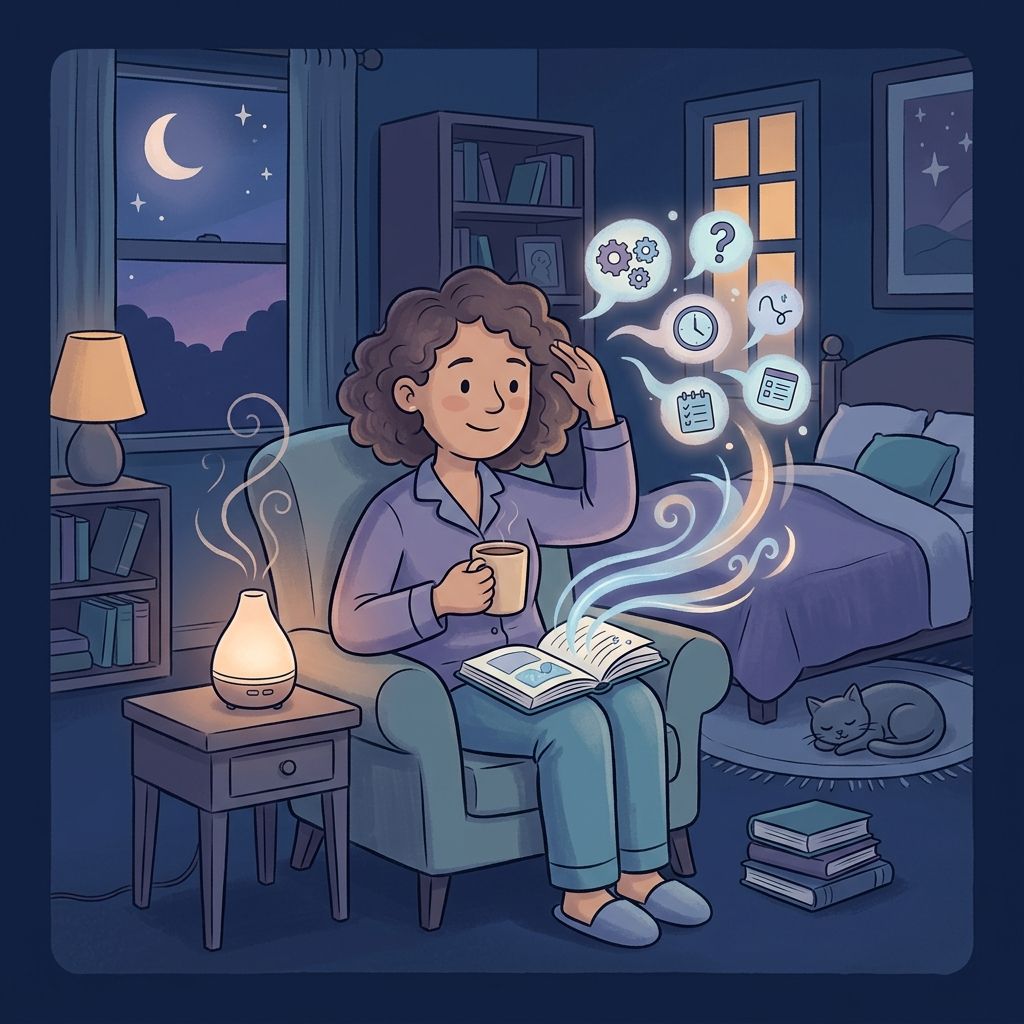
How to Quiet a Racing Mind at Bedtime
The lights go off, the house goes quiet, and your brain chooses this exact moment to review every unfinished task, replay old conversations, and draft plans for problems that do not exist yet. If this is your nightly routine, you are in vast company — and there are practical, evidence-based ways to change it.
Why Your Mind Races at Night
For many busy people, bedtime is the first unstructured silence of the entire day. All day long, tasks and screens keep the thinking mind occupied; the moment stimulation stops, everything deferred comes forward for processing. Your brain is not malfunctioning — it is doing its filing at the only opening in your schedule.
Insomnia adds a second layer: once sleeplessness becomes a worry of its own, the mind starts monitoring the process. Am I falling asleep yet? How many hours are left? This meta-worry is uniquely corrosive, because monitoring sleep requires exactly the alertness that prevents it. The techniques below address both layers — the overdue mental filing and the anxious monitoring.
Give Your Worries an Earlier Appointment
One of the most practical, widely used cognitive techniques in behavioral sleep medicine is disarmingly simple: scheduled worry time. Set aside fifteen to twenty minutes in the early evening — not at bedtime — and write down what is on your mind. Two columns work well: concerns, and the next small step for each. Nothing needs solving; it needs capturing.
The effect is that unfinished business gets a designated container. When thoughts arrive at midnight, you have somewhere to send them: noted, scheduled, handled tomorrow. Many people find that after a week or two, the nighttime committee simply has less to say, because its agenda has already been heard. A notepad by the bed extends the technique — one line scribbled in the dark tells your brain the item is safe to release.
Stop Chasing Sleep — It Runs Faster Than You
Sleep effort is the quiet villain of most bad nights. The harder you try to fall asleep, the more you activate the vigilance systems that keep you awake. Two counterintuitive approaches help dissolve the effort.
The first is simple permission: rather than commanding yourself to sleep, aim only to rest comfortably. Rest is achievable on demand; sleep is not — and removing the demand is frequently what lets sleep arrive.
The second, drawn from CBT-I's cognitive toolkit, is challenging the catastrophic arithmetic. Thoughts like "if I don't sleep now, tomorrow is ruined" are both untrue and highly activating. You have functioned on poor nights before; tomorrow will be tiring, not ruined. Deflating the stakes deflates the arousal.
Calm the Body, and the Mind Follows
Mental chatter rides on physical arousal, so techniques that settle the body reliably quiet the mind.
Slow breathing
Extend your exhale so it is longer than your inhale — for instance, in for four counts, out for six. Long exhales engage the parasympathetic nervous system, the body's built-in brake. A few unhurried minutes is enough; this is a practice, not a performance.
Progressive muscle relaxation
Working from feet to face, gently tense each muscle group for a few seconds, then release. The contrast teaches your body what letting go feels like, and the sequence gives a restless mind something pleasantly dull to follow.
Imagery and body scanning
Guided imagery — walking a familiar beach, room by room through a childhood home — occupies the mind's visual channel, crowding out verbal worry. A slow scan of attention through the body does the same. The best technique is whichever one you will actually practice, ideally started during the day so it is familiar by night.
When Lying There Stops Helping, Get Up
If your mind has fully committed to a 1 a.m. strategy session, stop hosting it in bed. After roughly fifteen to twenty minutes of clear wakefulness, move to another room, keep the lights dim, and do something calm until sleepiness returns. This is the stimulus control principle at the heart of CBT-I: the bed must remain a cue for sleep, not for spirited internal debate. Getting up feels like defeat and works like medicine.
And a gentle flag: if racing thoughts at night come with persistent low mood, panic, or anxiety that colors your whole day, that deserves a conversation with your clinician — sleep techniques help most when the daytime picture is also cared for.
Key takeaways
- A racing mind at bedtime usually reflects deferred mental processing plus anxious sleep-monitoring.
- Scheduled worry time in the early evening gives thoughts an appointment that isn't midnight.
- Reduce sleep effort: aim for rest, and challenge catastrophic thoughts about tomorrow.
- Slow exhale-weighted breathing and progressive muscle relaxation calm body and mind together.
- If clearly awake, leave the bed and return when sleepy — protect the bed-sleep association.
Frequently Asked Questions
Is a racing mind at night a sign of an anxiety disorder?
Not by itself — pre-sleep mental chatter is extremely common and often just reflects a busy life with no daytime pauses. If anxiety is intense during the day as well, or includes panic or persistent dread, check in with your clinician.
Do sleep meditations and apps with soundscapes work?
They help many people as part of a wind-down, chiefly by occupying attention and lowering arousal. They work best alongside structural changes — a consistent schedule and stimulus control — rather than as the entire strategy.
Why does my brain replay embarrassing memories at 2 a.m.?
Late-night solitude removes distraction while fatigue weakens emotional regulation, so old memories land harder than they would at noon. It is a normal artifact of the hour, not evidence the memories deserve the attention. Note the thought, and return to your breath or imagery.
Practice a Calmer Wind-Down With SnoozeSync
SnoozeSync builds these skills into a structured evening routine — guided wind-downs, worry-time prompts, relaxation exercises, and full CBT-I-based scheduling — so quieting your mind becomes a practiced habit rather than a nightly battle. Give your evenings a calmer script: try SnoozeSync.
Start Free 2-Week TrialPhysician-designed CBT-I. No credit card required to begin.